
Balance and Vestibular Exercises for Older Adults: Safe Guide
Gentle balance and vestibular exercises older adults can practice safely at home, when to get checked first, and how hearing and balance connect. Austin guide.
Quick answer: Balance depends on three systems working together — your eyes, the sensors in your feet and joints, and the vestibular system in your inner ear. Short, supported exercises practiced most days can help older adults feel steadier. New or unexplained dizziness should be checked by a clinician before you start.
Written by Victor Davis, HWC. Educational information only — health coaches do not diagnose or treat medical conditions, including vertigo or vestibular disorders. Follow your clinician's or physical therapist's guidance first.
The three systems behind balance
- Vision tells your brain where you are compared with the room.
- Somatosensory input from the feet, ankles and joints reports the ground under you.
- The vestibular system in the inner ear senses head movement and gravity.
With age, each system can lose a little sharpness. Training them together helps the brain combine their signals more reliably.
Check first: red flags
Stop and talk with a clinician before exercising if you have sudden or severe dizziness, spinning vertigo, new hearing loss or ringing in one ear, double vision, slurred speech, weakness on one side, or a recent fall with injury. Sudden symptoms like these can be urgent — call 911.
Set up a safe practice space
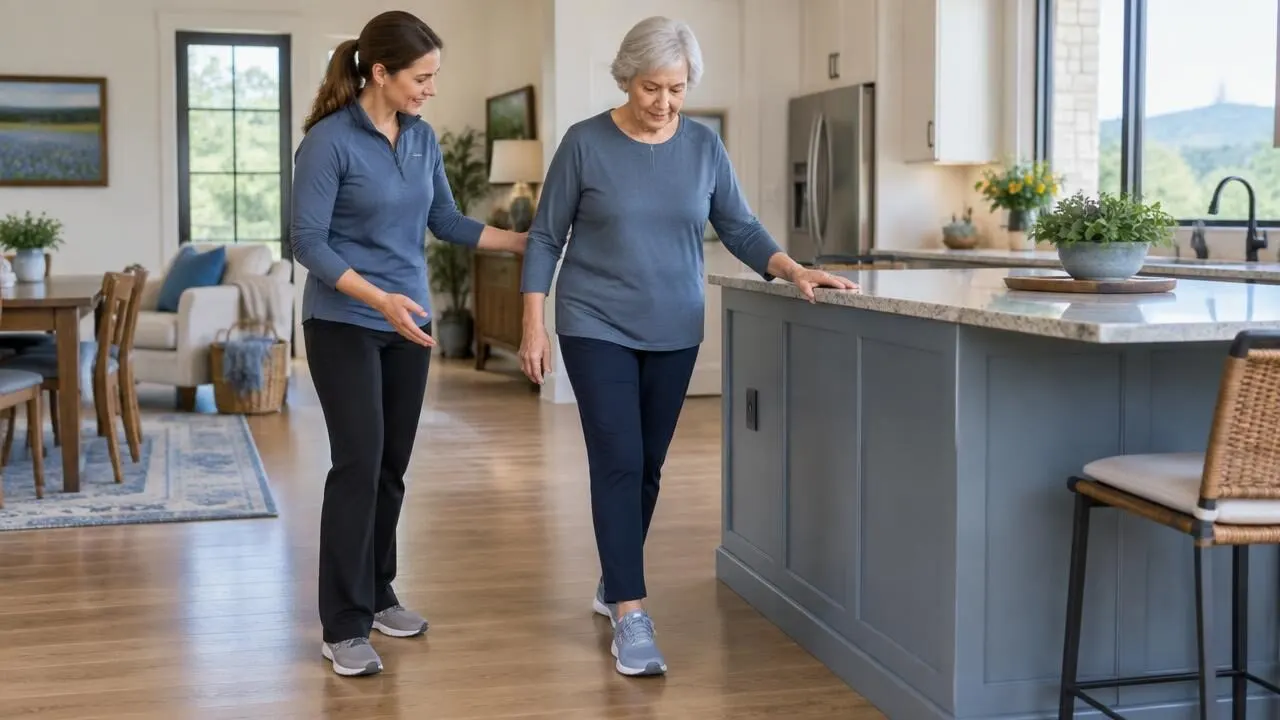
Stand beside a sturdy counter, wear supportive shoes, clear rugs and clutter, and keep a chair nearby. Start with both hands lightly on the counter, then one hand, then fingertips only as you get steadier.
Five starter exercises
1. Supported narrow stance
Stand with feet together for 30 seconds. When it feels easy, move one foot half a step forward (semi-tandem), then heel-to-toe (tandem).
2. Slow head turns
Standing or seated, focus on a word on the wall. Slowly turn your head side to side while keeping the word clear, for 30 seconds. Then try up and down. Mild, brief dizziness can be normal; stop if it is strong or lasting.
3. Sit-to-stand
From a firm chair, stand up without using your hands if you can, then sit down slowly. Do 8–10 repetitions. Strong legs are one of the best protections against falls.
4. Weight shifts
Shift your weight slowly from one foot to the other, then forward and back, keeping your feet planted. Do 10 slow shifts in each direction.
5. Heel-to-toe walk
Walk along the counter placing heel directly in front of toe for 10–15 steps. Keep a hand ready to touch the counter.
The hearing connection
Hearing and balance share the inner ear, and studies link untreated hearing loss with a higher risk of falls. If you notice muffled conversations along with unsteadiness, take our free online hearing screener and share the results with your clinician.
Progress gradually
Add one challenge at a time: less hand support, longer holds, eyes looking up, or a softer surface such as a folded towel. Practice 10–15 minutes most days and add regular walking and strength training.
Balance support in the Austin area
Victory Health & Wellness offers balance and fall-risk assessments at our West Lake Hills and Hutto clinics, then builds a home practice plan you can follow between visits. Learn more on our balance and fall-risk assessment page or book a free wellness consultation.
FAQ
- How often should older adults do balance exercises?
- Short sessions of 10–15 minutes on most days work well. Balance improves with frequent practice, so daily short sessions usually beat one long weekly session.
- Can I do balance exercises if I get dizzy?
- New, severe or unexplained dizziness should be checked by a clinician first. Some causes need specific treatment, and a vestibular physical therapist can recommend exercises matched to your condition. Once you are cleared, gentle supported practice is often part of the plan.
- Is hearing connected to balance?
- Yes. The inner ear holds both the hearing organ and the balance organ, and research links hearing loss with higher fall risk. A hearing screening is a simple step if you notice both hearing and balance changes.
- What is the safest place to practice?
- Next to a sturdy kitchen counter or in a corner with a chair in front of you, on a non-slip floor, wearing supportive shoes. Have someone nearby when you try a harder exercise for the first time.
- Does Victory offer balance assessments?
- Yes. Victory Health & Wellness offers balance and fall-risk assessments and coaching at our West Lake Hills and Hutto clinics, with home practice plans between visits.
Ready to work on your health goals?
Our health and wellness team in West Lake Hills, Hutto, and virtually nationwide can build a plan around your goals.