
How to Read a CGM Graph: Spikes, Dips and Time in Range
A plain-language guide to reading a continuous glucose monitor graph — spikes, dips, time in range and overnight patterns — from an Austin health coach.
Quick answer: A CGM graph shows your glucose every few minutes across the day. Read it in four passes: the overnight baseline, the size of each meal spike, how fast you come back down, and the share of time you spend in your target range. One spike is not a problem. A repeating pattern is where the useful information lives.
Written by Victor Davis, HWC. Educational information only — health coaches do not diagnose or treat medical conditions. Discuss your glucose data and any targets with your licensed clinician.
What a CGM actually measures
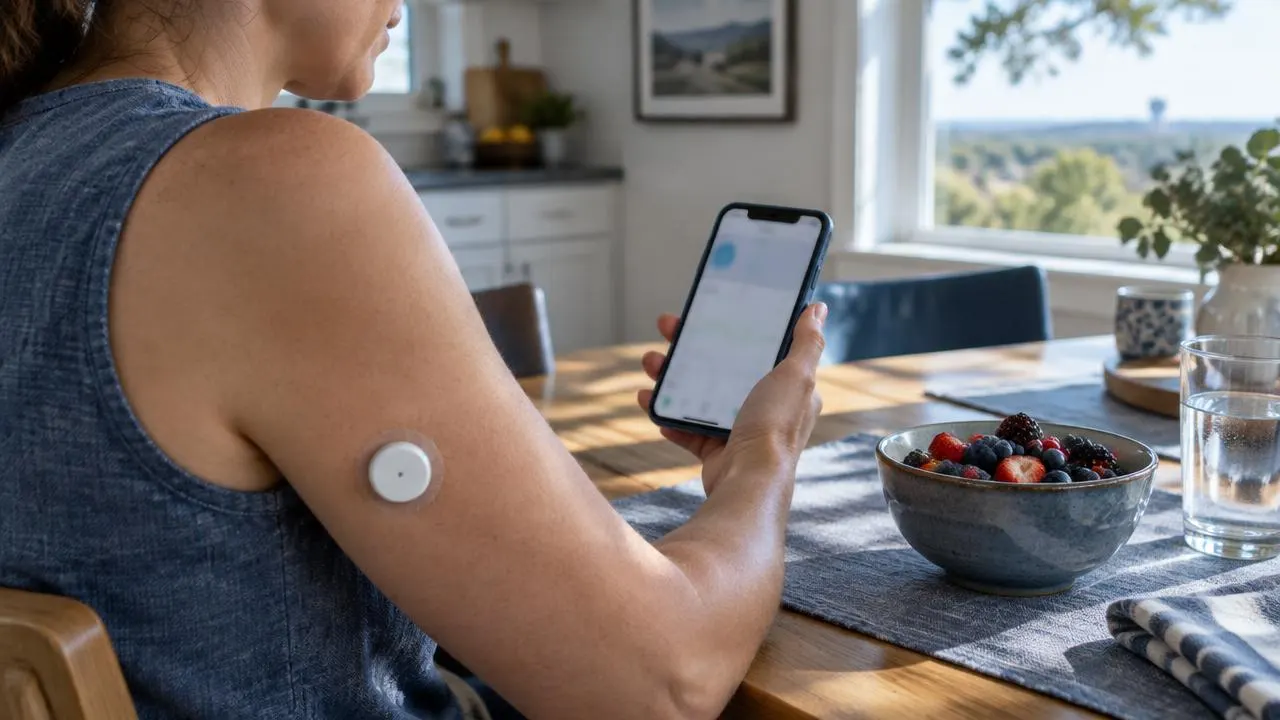
A continuous glucose monitor is a small sensor worn on the back of the upper arm or the abdomen. A tiny filament under the skin reads glucose in the interstitial fluid — the fluid around your cells — and sends a reading to your phone every few minutes. Because interstitial glucose trails blood glucose by roughly 5 to 15 minutes, the line on your graph is a slightly delayed, smoothed picture of what your blood is doing.
That delay matters when you compare a CGM to a finger-stick meter. If the two disagree right after a meal or a workout, the CGM is usually just catching up.
The four things to look at
1. The overnight baseline
Start with the flattest part of the day: sleep. A steady, level line overnight is a good sign. Watch for two common patterns:
- An early-morning rise before you eat, often between 4 and 8 AM. This is commonly linked to the dawn phenomenon, when wake-up hormones release stored glucose.
- A sudden sharp dip that bounces right back. If it happens while you sleep on the sensor arm, it is usually a compression low, not a true drop.
2. The height of each spike
After a meal, glucose rises. That is normal and expected. What we coach around is the size of the rise relative to your starting point. A breakfast that lifts you 20 points and one that lifts you 70 points tell very different stories, even if both end up "in range."
3. The speed of the return
How long it takes to get back near baseline is often more useful than the peak itself. A smooth return within two to three hours suggests the meal was handled comfortably. A long, high plateau — or a fast crash below where you started — is the pattern linked to afternoon energy dips and cravings.
4. Time in range
Most CGM apps summarize the day as a percentage of time spent inside a target band. For people with diabetes, the commonly used consensus band is 70–180 mg/dL. Wellness programs for people without diabetes often look at a tighter band. Your clinician decides the right target for you; the coaching question is simply whether that percentage is moving the right way week to week.
Reading common shapes
| What you see | What it often reflects | A habit to test |
|---|---|---|
| Tall, sharp spike after breakfast | Fast carbohydrates on an empty stomach | Lead with protein; add fiber; keep the same carbs |
| Spike, then crash below baseline | A quick rise followed by a strong insulin response | Pair carbs with fat or protein; slow the meal down |
| Long high plateau after dinner | Large late meal and little movement afterward | A 10–15 minute walk after eating |
| Higher day after poor sleep | Short sleep reduces insulin sensitivity | Protect a consistent bedtime |
| Rise during hard exercise | Stress hormones releasing stored glucose | Usually expected; watch the recovery afterward |
How to run a useful two-week experiment
- Days 1–3: just live. Eat normally and log meals so you have an honest baseline.
- Days 4–7: test one change. Try the same breakfast two ways — for example, toast alone versus toast with eggs.
- Days 8–11: add movement. Walk after your largest meal and compare the curve with earlier days.
- Days 12–14: check sleep and stress. Note how a short night or a stressful day changes the next morning.
Change one thing at a time. Two changes on the same day make it impossible to tell which one helped.
Common mistakes
- Chasing a flat line. Glucose is supposed to move. The goal is a smaller, smoother response, not zero.
- Cutting fruit and vegetables. Whole foods with fiber usually produce gentle curves. Cutting them to flatten a graph trades long-term health for a prettier chart.
- Reacting to one reading. Look for patterns across several days before changing anything.
- Self-adjusting medication. If you take glucose-lowering medication, any changes belong with your prescriber.
When to talk to your clinician
A CGM used for wellness is a learning tool. Repeated readings well above or below your expected range, frequent low readings with symptoms such as shakiness or confusion, or any concern about diabetes should go to a licensed medical provider.
Get help turning the graph into habits
Victory Health & Wellness offers 14-day CGM coaching in the Austin area at our West Lake Hills and Hutto clinics and virtually. We help you set up the sensor, review your graph with you, and turn the patterns into a small number of habits you can keep — often paired with an InBody scan so you can see body composition change alongside glucose.
FAQ
- What is a normal glucose spike after a meal?
- In people without diabetes, glucose commonly rises after a meal and returns toward its starting level within about two to three hours. Many coaching programs watch for peaks that stay under roughly 140 mg/dL and a smooth return to baseline. These are general reference points, not diagnostic thresholds — your clinician interprets your numbers.
- What does time in range mean on a CGM?
- Time in range is the percentage of the day your glucose stays within a target band. For people with diabetes, international consensus commonly uses 70–180 mg/dL. Wellness-focused programs for people without diabetes often look at a tighter band. Your provider sets the target that applies to you.
- Why is my glucose high in the morning before I eat?
- A rise in the early morning is often linked to the dawn phenomenon, when hormones such as cortisol prepare the body to wake up. Short sleep, a late heavy dinner or stress can also play a role. Patterns that worry you should be reviewed with a licensed clinician.
- Can sleeping on my sensor cause false low readings?
- Yes. Pressure on the sensor overnight can produce a sudden dip that does not reflect true blood glucose, often called a compression low. It usually looks like a sharp drop and a quick recovery when you roll over.
- Do I need diabetes to use a CGM?
- No. Over-the-counter CGMs are now available for adults who do not use insulin, and many people use a two-week block to learn how their own meals, sleep and activity affect glucose. Victory offers 14-day CGM coaching at our West Lake Hills and Hutto clinics and virtually.
Ready to work on your health goals?
Our health and wellness team in West Lake Hills, Hutto, and virtually nationwide can build a plan around your goals.