How Sleep Affects Your Health: 6 Research-Backed Findings
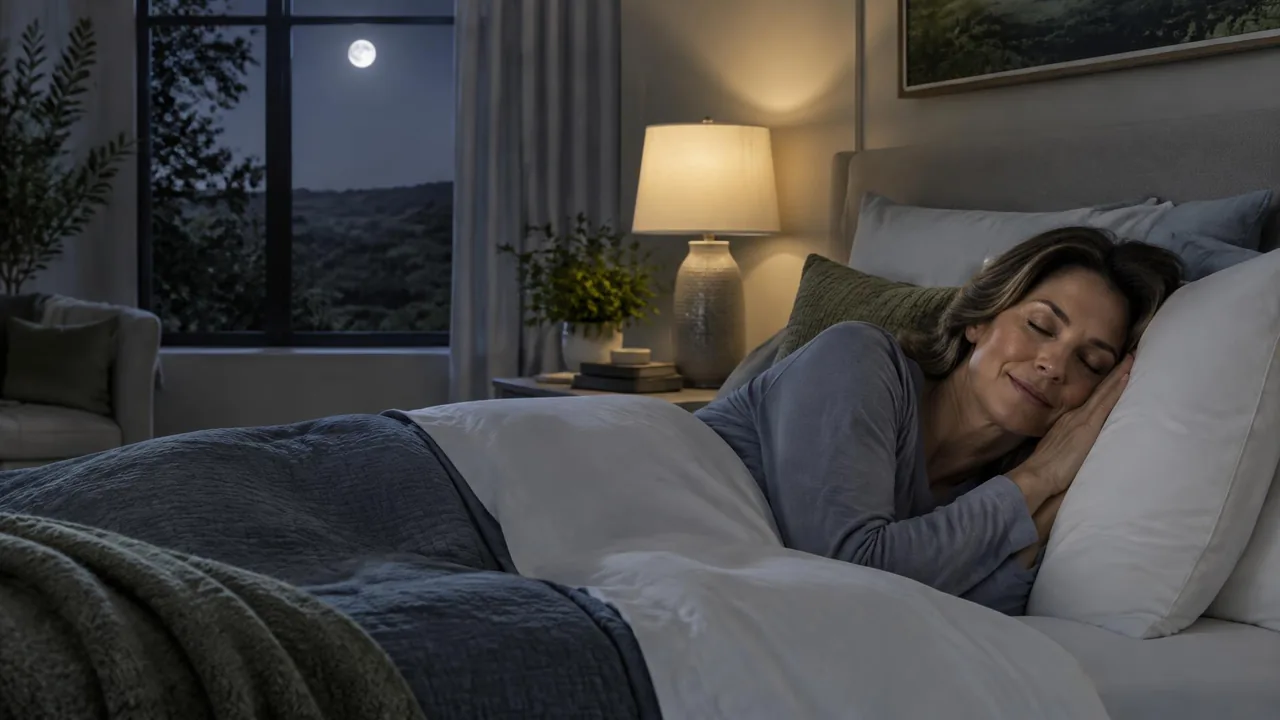
Quick answer: Sleep affects far more than next-day energy. Research connects sleep duration, timing and quality with appetite, immune response, mental health, cardiovascular and metabolic health, and how accurately you interpret wearable data. The practical starting point is simple: protect a consistent sleep window, dim evening light, and judge progress by how you feel and function over several weeks—not by one perfect score.
Written by Victor Davis, HWC. This article is educational and does not diagnose or treat a sleep disorder. Persistent insomnia, severe daytime sleepiness, loud snoring, gasping during sleep or sudden changes in mood warrant evaluation by an appropriate licensed clinician.
Why sleep matters for healthspan
Healthspan is the portion of life spent functioning well—not merely the number of years lived. Nutrition and movement matter, but short or irregular sleep can make both harder to sustain. It can change hunger signals, reduce training recovery, affect concentration and mood, and leave you with less energy for the habits you intended to follow.
The Centers for Disease Control and Prevention says adults ages 18–60 generally need seven or more hours nightly; needs vary with age and the individual. Duration is only one piece. Regular timing, continuity, daytime function and symptoms such as snoring or gasping also matter.
1. Ordinary evening light can shift melatonin
Melatonin helps signal biological night. In a controlled laboratory study, the group-average light level associated with half-maximal melatonin suppression was about 25–30 lux—roughly the range produced by some indoor evening lighting. Individual sensitivity varied by more than 50-fold, so 30 lux is not a universal cutoff.
The useful lesson is not to fear every lamp. It is to create contrast between bright days and dimmer evenings:
- Get outdoor light soon after waking when practical.
- Lower overhead lighting during the last one to two hours before bed.
- Use warmer, task-level light for reading or winding down.
- Keep the bedroom dark enough that light is not disturbing your sleep.
Research: Phillips et al., Proceedings of the National Academy of Sciences (2019).
2. Sleep and hearing health may be connected—but the evidence is associative
A study of 9,573 middle-aged and older adults found that very short sleep was associated with greater odds of self-reported hearing loss, while short daytime naps were associated with lower odds. This study did not prove that changing sleep prevents hearing loss, and it did not use a hearing test to establish every outcome.
Researchers have proposed several possible links, including vascular, inflammatory and oxidative-stress pathways. Those mechanisms remain hypotheses rather than proof that sleep habits directly cause or prevent hearing loss.
If you notice hearing difficulty, tinnitus or listening fatigue, a formal hearing evaluation is more useful than trying to interpret the symptom through sleep alone. Victory Health & Wellness provides health coaching; audiology and hearing care are provided separately through Victory Hearing & Balance.
Research: Cui et al., Frontiers in Public Health (2023).
3. Short sleep can change appetite and daily energy intake
One small controlled study of 12 healthy young men found that sleep restriction was associated with an 18% reduction in leptin, a 28% increase in ghrelin and greater hunger. Because the study was small and included only men, those exact percentages should not be treated as a prediction for everyone.
A separate meta-analysis pooling 11 intervention studies and 172 participants found that partial sleep deprivation increased energy intake by an average of about 385 calories per day. That does not mean every short sleeper eats exactly 385 extra calories, but it helps explain why appetite can feel harder to manage after poor sleep.
Try this: After a short night, avoid turning the next day into a test of willpower. Keep regular meals, include protein and fiber, hydrate, and protect the next night's routine rather than overcorrecting with severe restriction.
Research: Spiegel et al., Annals of Internal Medicine (2004); Al Khatib et al., European Journal of Clinical Nutrition (2017).
4. Sleep around vaccination can influence antibody response
A 2023 meta-analysis found that sleeping fewer than six hours around vaccination was associated with a smaller antibody response. The result was robust in men; the researchers said more objective data were needed in women. The evidence does not establish a special bedtime or guarantee a particular level of protection.
The practical takeaway is modest: if you are receiving a vaccination, support your usual sleep routine before and after it when possible. Questions about vaccination timing, effectiveness or medical risk belong with your physician or pharmacist.
Research: Spiegel et al., Current Biology (2023).
5. Sleep trackers estimate sleep—they do not measure it like a sleep lab
Consumer rings and watches infer sleep from movement, heart rate and related signals. In a comparison of seven devices with polysomnography, the devices were highly sensitive for detecting sleep but much less specific for detecting wakefulness. In plain language, lying still can be counted as sleep.
Trackers can still help when you use them for the right questions:
- Useful trends: bedtime, wake time, total sleep estimate and consistency over several weeks.
- Use caution: a single night's deep-sleep, REM, readiness or recovery score.
- Prioritize function: energy, mood, concentration and safety during the day.
Researchers use the term orthosomnia for an unhealthy pursuit of perfect wearable sleep data that can itself increase sleep anxiety. If checking your score makes sleep feel worse, take a break from the device and discuss persistent concerns with a clinician.
Research: Chinoy et al., SLEEP (2021); Baron et al., Journal of Clinical Sleep Medicine (2017).
6. CBT-I is first-line care for chronic insomnia
Cognitive behavioral therapy for insomnia (CBT-I) is recommended as first-line treatment for chronic insomnia by the American Academy of Sleep Medicine. It combines structured behavioral and cognitive strategies rather than relying on general sleep tips alone.
A meta-analysis found meaningful improvements in time to fall asleep, time awake after sleep onset and sleep efficiency. Response and remission rates vary by population and outcome, so a universal “success rate” is misleading. CBT-I can be delivered in person or through validated digital programs. The free CBT-i Coach app is designed to support treatment with a provider; it is not a replacement for professional evaluation.
Do not start, stop or change a sleep medication because of an article or app. Review medications, alcohol use, breathing symptoms and persistent insomnia with an appropriate licensed clinician.
A practical seven-day sleep reset
- Choose a wake time you can keep within about 30 minutes every day.
- Get outdoor morning light and ordinary daytime movement.
- Set a caffeine cutoff at least eight hours before bed if caffeine affects you.
- Dim the environment during the last hour before bed.
- Move planning, email and problem-solving out of bed.
- Track bedtime, wake time and daytime energy—not every stage score.
- At week's end, keep the one change that helped most.
For four weeks of practical education on sleep, mood, appetite and routines, join The Importance of Sleep email series. If sleep is one part of a broader health goal, explore our lifestyle and wellness coaching approach.
When to seek clinical care
Health coaching can help with routines, accountability and behavior change. It does not diagnose insomnia, sleep apnea, depression, hearing loss or another medical condition. Seek clinical evaluation when sleep difficulty lasts for weeks, interferes with daytime function or safety, or includes loud snoring, gasping, morning headaches, chest pain, severe mood changes or falling asleep while driving.
Build a sleep plan you can repeat
The best sleep plan is not the most complicated one. It is a small set of behaviors you can repeat and review honestly. Victory Health & Wellness offers coaching in Hutto, West Lake Hills and virtually across the United States. Request a free discovery call to discuss how sleep, movement, nutrition and stress fit into your goals.
FAQ
- How much sleep do adults need?
- Most adults need at least seven hours of sleep per night on a regular basis. Individual needs vary, and persistent daytime sleepiness deserves a conversation with a licensed clinician.
- Can lack of sleep affect appetite and weight?
- Yes. Controlled studies and pooled trials associate short sleep with changes in appetite signaling and higher daily energy intake. Sleep is one part of weight health alongside nutrition, activity, medications, stress and medical conditions.
- Are sleep trackers accurate?
- Consumer trackers are generally better at detecting sleep than wakefulness. Use them to watch multi-week patterns in timing and consistency, not to diagnose a sleep disorder or judge one night's sleep stages.
- When should I get professional help for sleep problems?
- Talk with a licensed clinician if sleep difficulty persists, affects daytime safety or function, or comes with loud snoring, gasping, chest pain, severe mood changes or other concerning symptoms. CBT-I is a first-line treatment for chronic insomnia.
Get new articles by email
Grab the free Victory Wellness Guide and we'll send practical health tips and new articles to your inbox.
Ready to work on your health goals?
Our health and wellness team in West Lake Hills, Hutto, and virtually nationwide can build a plan around your goals.